

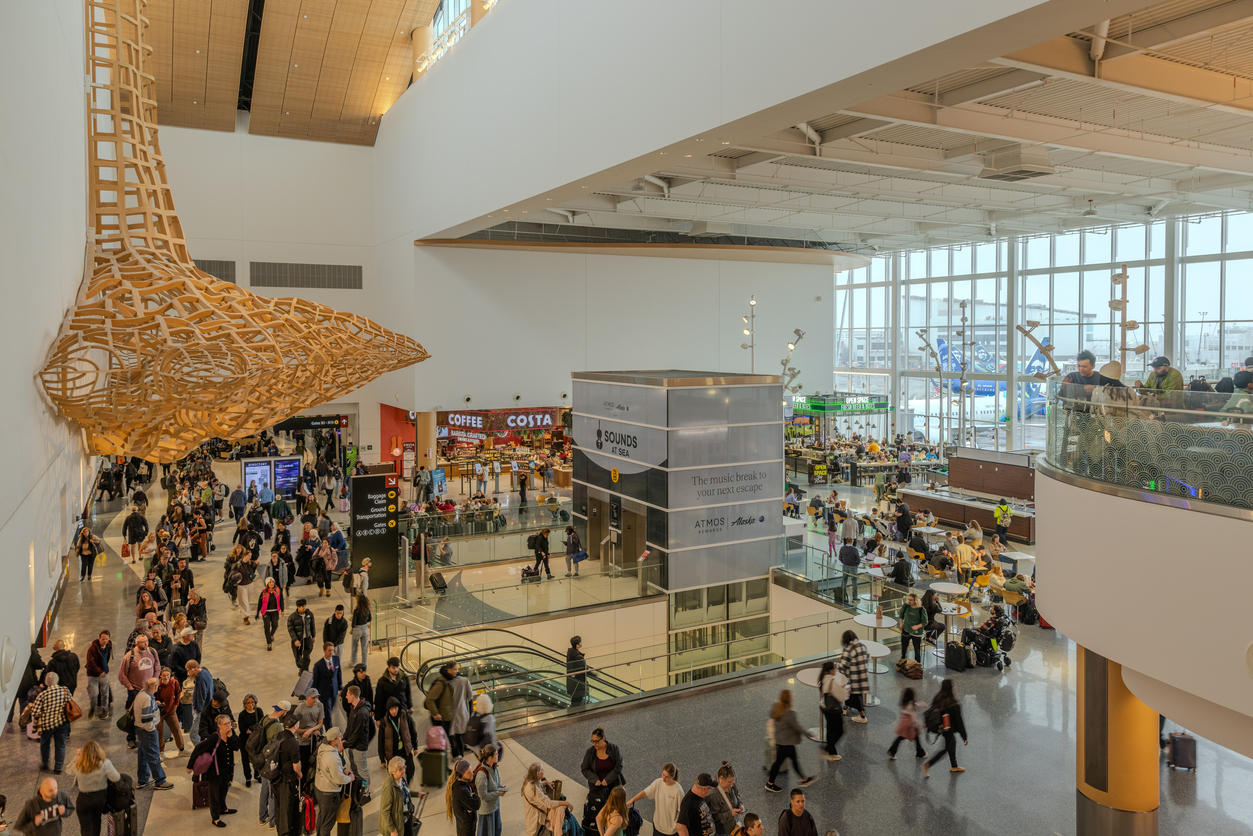
The holiday season brings a surge of travelers through Seattle-Tacoma International Airport. Behind the scenes, ramp workers, baggage handlers, fuelers, cleaners, construction workers, and other employees are working around aircraft, vehicles, heavy equipment, and one another.
When a serious workplace injury happens at Sea-Tac, determining responsibility can be complicated. An injured worker may technically have one employer, but several companies can control the equipment, work areas, and safety procedures involved in an incident.
For workers injured at Sea-Tac, an L&I claim may only be one part of the legal picture.
Why Sea-Tac Workplace Injuries Can Be Complicated
Sea-Tac is operated by the Port of Seattle, but the Port is far from the only organization working there.
Airlines, ground handling companies, fueling contractors, maintenance companies, construction contractors, subcontractors, equipment manufacturers, and other businesses may operate in the same areas. During busy holiday travel periods, these operations continue while passenger and baggage volumes increase.
That makes Sea-Tac a complex, multi-employer worksite.
After an airport workplace injury, the question is not necessarily limited to who employed the injured worker. Determining liability can require investigating who controlled the area, equipment, or work process that contributed to the injury.
Who Could Be Responsible for a Sea-Tac Worker Injury?
Depending on how the injury occurred, several parties may need to be investigated.
An airline could potentially bear responsibility when its employees, equipment, or operational decisions contribute to unsafe conditions. Ground handling companies may be involved when injuries are caused by baggage tugs, belt loaders, aircraft pushback equipment, or other ground service equipment.
Construction work creates another layer of potential responsibility. General contractors and subcontractors may control scaffolding, temporary barriers, equipment, pedestrian routes, excavations, and other conditions near active airport operations.
Equipment manufacturers and maintenance companies may also become relevant when defective or improperly maintained machinery causes a serious injury.
The Port of Seattle can be another important part of the investigation because of its role in controlling airport property and safety systems.
The Port of Seattle May Have Safety Responsibilities
Washington courts have specifically addressed workplace safety responsibilities at Sea-Tac.
In Afoa v. Port of Seattle, the Washington Supreme Court considered the Port’s responsibilities to a worker injured at the airport. The case is significant because it addressed Sea-Tac as a multi-employer worksite and examined the Port’s control over workplace safety.
For an injured airport worker, this means the name printed on a paycheck does not necessarily tell the entire story.
An investigation may look at who controlled the location where the injury occurred, who established safety procedures, who maintained equipment, and which organization had the authority to identify or correct the dangerous condition.
An L&I Claim May Not Be the Only Option
Workers injured on the job in Washington may qualify for benefits through the Department of Labor & Industries, commonly known as L&I.
L&I can provide important benefits such as medical treatment and partial wage replacement. However, Washington law also allows an injured worker to pursue a third-party claim in certain circumstances when someone other than the worker’s employer caused or contributed to the injury.
At Sea-Tac, that distinction can be particularly important.
A baggage handler employed by one company, for example, could potentially be injured by equipment controlled by another company. A construction worker could be hurt because of conditions created by a separate contractor. A ramp worker could be injured in an incident involving an airline, ground handling company, maintenance contractor, or another airport operator.
A third-party personal injury claim can provide compensation for losses that the workers’ compensation system does not fully address, including pain and suffering and other damages resulting from a catastrophic injury.
Evidence Can Be Critical After an Airport Workplace Injury
Airport operations change constantly. Equipment is moved or repaired. Construction zones shift. Temporary barriers disappear. Contractors complete projects and leave the airport.
After a serious Sea-Tac workplace injury, evidence may include surveillance footage, photographs, equipment maintenance records, incident reports, safety policies, witness statements, training records, and documents showing which company controlled the area or equipment involved.
Identifying every potentially responsible company can be just as important as determining exactly how the injury occurred.
Understanding Your Rights After a Sea-Tac Workplace Injury
A serious injury at Sea-Tac may involve much more than a workers’ compensation claim. When multiple companies share the same worksite, determining who controlled the dangerous condition can uncover additional legal options for an injured worker.
Bishop Legal has extensive experience representing workers injured at Sea-Tac and other complex Washington worksites. If you were seriously injured while working at the airport, our team can help you understand how L&I and a potential third-party injury claim may apply to your situation.